
Cities to fly to

Sights
 Matterhorn
Photo: Photo: chil, on Camptocamp.org Derivative work:Zacharie Grossen, CC BY-SA 3.0  Jungfraujoch
Photo: Pmau, CC BY-SA 4.0  Kapellbrücke
Photo: Simon Koopmann, CC BY-SA 2.5  Chillon Castle
Photo: Giles Laurent, CC BY-SA 4.0  Rhine Falls
Photo: Kabelleger / David Gubler, CC BY-SA 4.0  Lake Lucerne
Photo: Ttrainer, CC BY-SA 3.0  Aletsch Glacier
Photo: Robert J Heath, CC BY 2.0 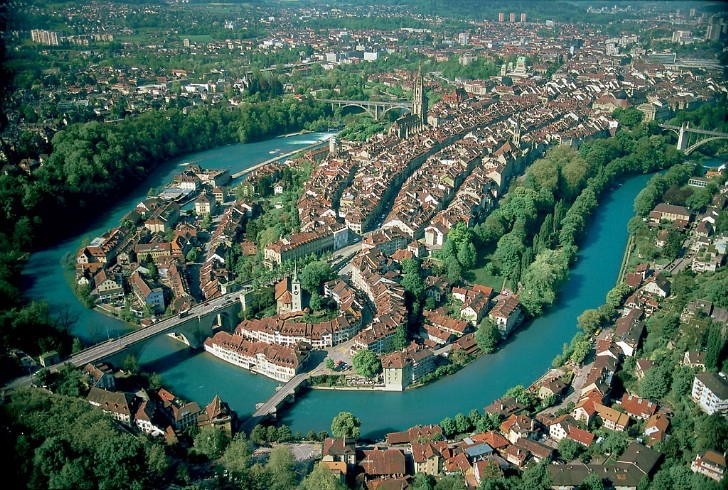 Old City
Photo: de:Benutzer:Reaast, Public domain
Before you go
AI wrote this from well-established facts. Check entry rules and opening hours yourself before the trip.
Good to know
- 1Switzerland has four national languages: German, French, Italian and Romansh. Which one you hear depends on the region, and Swiss German speech differs a lot from the standard German written in newspapers.
- 2The country is a confederation of cantons, each with its own government and traditions. Citizens vote on national questions in referendums several times a year.
- 3Switzerland has stayed out of wars between other countries for centuries and is known for its neutrality. Geneva is home to many international organisations, including the Red Cross.
- 4The currency is the Swiss franc, even though the country is in the middle of Europe. Switzerland is not a member of the European Union.
- 5Cheese and chocolate are part of everyday life. Fondue and raclette are the classic cheese dishes, and rösti, a fried potato dish, is common in the German-speaking regions.
- 6The Alps cover a large part of the country, and the Matterhorn, near Zermatt, is probably its most recognisable peak. Lake Geneva, Lake Lucerne and Lake Zurich are among the best-known lakes.
Tips for a first visit
- Use the trains, buses and boats. They connect well with each other, and many scenic routes are ordinary public transport, so you do not need a car.
- Cards are accepted widely, but carry a little cash for mountain huts, small village shops and some markets.
- Tap water is safe and good to drink, and many towns have public fountains where you can fill a bottle.
- Be on time. Swiss people expect punctuality for appointments, and it is polite to greet shopkeepers and people you meet on a footpath.
- Try regional food rather than only fondue: in the south you will find Italian-style cooking, and in the west the cooking is closer to French.
- Mountain weather changes quickly, so bring layers and a waterproof jacket even on a sunny day, and check conditions before heading to high ground.
When to go
Summer, roughly June to September, is the best time for hiking, lake swimming and open mountain railways. Winter brings snow and skiing in the Alps, with Christmas markets in the towns. Spring and autumn are quieter, with blossom or golden foliage, though some high-mountain lifts and huts may be closed.
Getting around
Most people travel between Swiss cities by train. The network is dense, trains are frequent, and the main cities are usually only a few hours apart. Buses, post buses and boats cover the places the rail lines do not reach, and cable cars and mountain railways take you up from the valleys.